

When a small guide becomes a best-selling.
Guides to churches
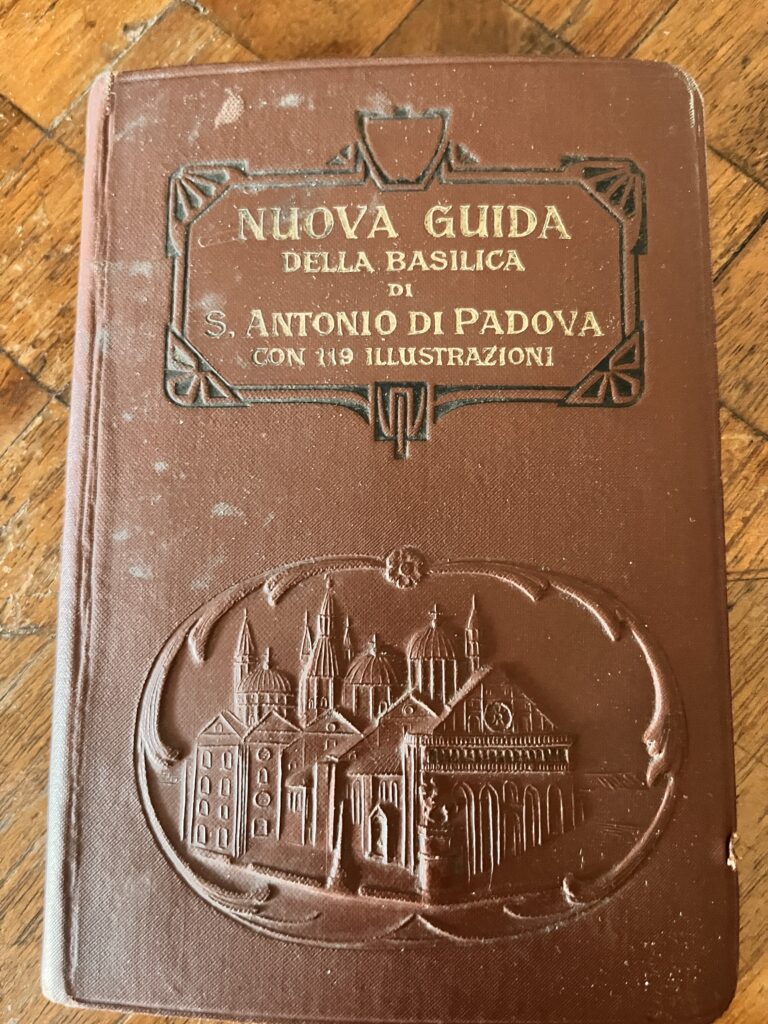
This is the guide to the Saint that Father Luigi Bondini wrote in 1910, is small and his cover is a bit worn, as it is best for the books that have often been browsed.
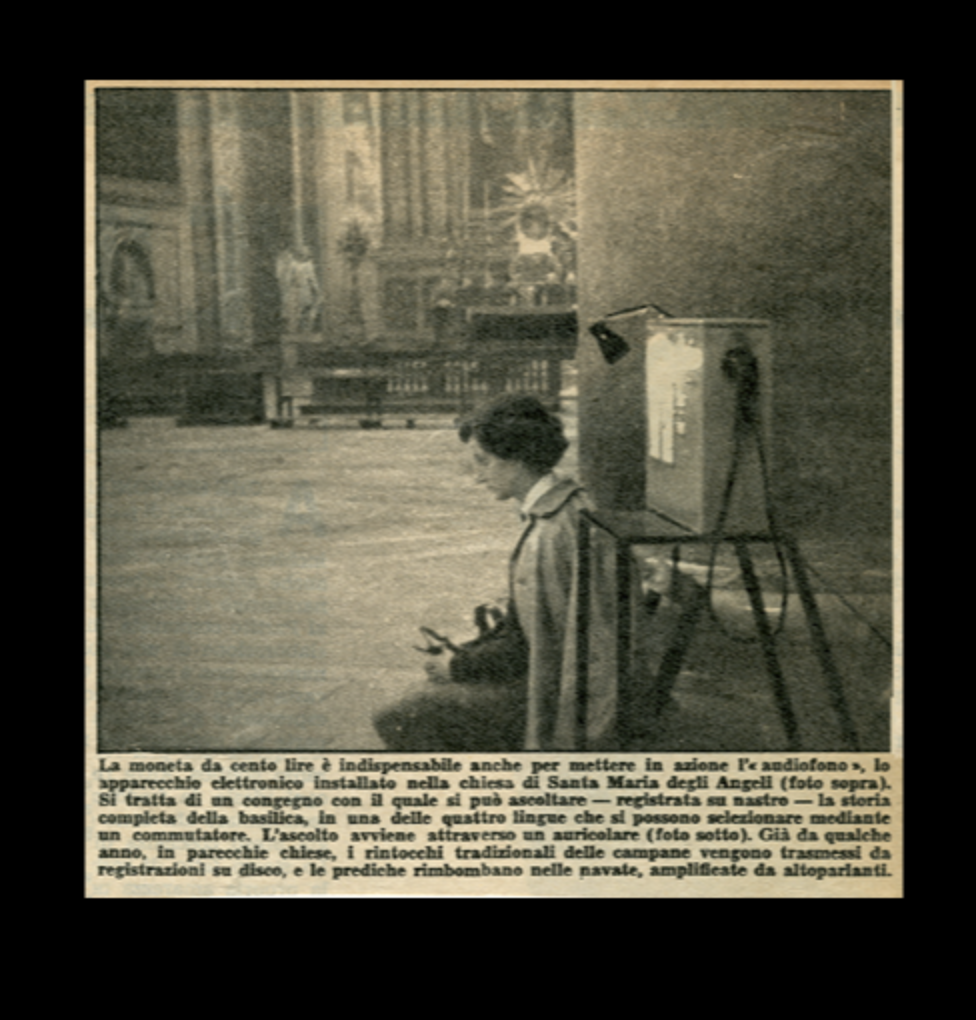
The paper guides of monuments and churches are now truly obsolete. We can admire a church or an exhibition listening to some recorded audio with headphones and the device in hand. Many years ago there were (and there are still) the gray machines, in which you put a coin, you took the crocodile and rested it in the ear and a voice set, now grabbing for the wear of the magnetic tape on which it was recorded, he told of the church and its works, and often it was in two to listen and we turned now here and now there, following the rhythm imposed by the voice. Unbelievable, but in my research I couldn't find a new picture of this, which is 1961.
But before that there were still paper guides, that if you were a well-organized one you went to buy first in a library, and there you found the photos and the stories. There are still, in small shelves that only serve for those who buy (or want to give) the travel box in some city for a weekend that someone will have to arrange not to miss the gift.
Before there were the writings close to the paintings, year of realization and author.
And before that there was nothing, one entered the church to pray, to ask for a grace, to participate collectively in an aspiration. It did not matter the author of the work (that never signed it) but the divine message to mortal man.
(Here you find the link to the ASMR video)
But society grows and changes, fortunately, and this is how it begins this story.
Father Luigi Bondini was a lesser convent friar, namely one of three Franciscan male beggars orders (the other two are the minors and the Capuccini). I couldn't find her date of birth but after the philosophical and theological studies she was sent to specialize in Leuven in Belgium and 1895 is ordained a priest, which means he was at least 25/26 years at a minimum. So he had to have about forty when he was commissioned the booklet we see here. And I like to think that the possibility of writing artistic beauties of the Saint was a great satisfaction for him.
Of course the artistic works speak to all those who know how to see them, but they certainly speak more to those who are believing because this allows to find reconditive meanings that resonate with their own spirit. And so I like to think about the father Luigi Bondini who in his room thought about how to organize the booklet, how to update it according to modern techniques of photography, to what setting to give so that the booklet was on the one hand an instrument to show the works of art, on the other a path to feel closer to God and especially to the Saint, that for us Paduans has a deep meaning of roots and communion, even for us modern accustomed to being skeptical. It is true that we call it the Saint and we do not need to add the name of Antonio (who then was called Ferdinand, but let us lose and do not divage).
Then as neither friars live of air, and the church of the Saint always has a constant need for maintenance and protection that results in a trivial need of quattrini, in the last pages there are all the opportunities given to the faithful to actively participate with a subscription.
In any case Father Bondini had to be a very good one because I saw that in 1929, newly consecrated archbishop, he was sent to Beirut (or perhaps in Syria, the news is conflicting).
By doing research, I saw that this is not the booklet of 1911, which would report the date of publication and it was so successful that from the year after the reprints began, which ended around the early 1920s.
In 2000 Carlo Mazzacurati made a delicious movie entitled "The Language of the Holy" that you can see streaming on YouTube. Look at him because he deserves it. He tells a lot about the Venetians and the Saint.


Leave a comment